Award-Winning Italian Violins

Award-Winning Italian Violins

cremona violin online

Award-Winning Italian Violins

Award-Winning Italian Violins

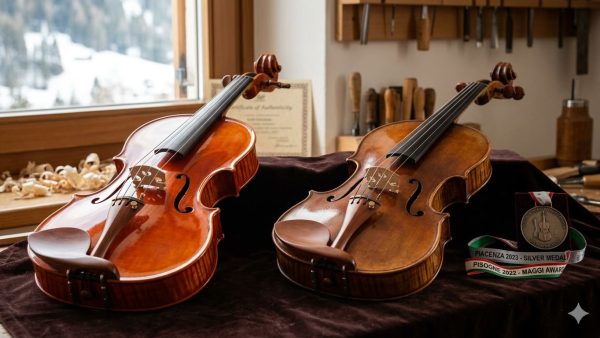
In the elite world of international lutherie, success is defined by the ability to dialogue with history while asserting a unique artistic voice. At Iotti & Vibe, our recent triumphs in Piacenza and Pisogne are the result of deep historical research and a sophisticated approach to modern aesthetics. By revisiting the iconic forms of Guadagnini and Sgarabotto, we have created instruments that meet the rigorous standards of today’s most prestigious juries.

The Piacenza Success: A Modern Interpretation of G.B. Guadagnini (2023)

Awarded: Silver Medal at the G.B. Guadagnini International Violin Making Competition, Piacenza.

The challenge was to pay homage to one of Italy’s most innovative masters. Our winning entry was a violin based on a Guadagnini model, distinguished by its bold character and acoustic efficiency.

Rather than a simple copy, this instrument featured a refined modern varnish. This choice emphasizes the wood’s natural beauty and ensures a vibrant, contemporary aesthetic that appeals to the modern soloist. The Silver Medal validates our vision: that a historical model, when executed with modern technical precision and a fresh visual approach, can achieve world-class results.

The Maggi Award in Pisogne: Celebrating the Sgarabotto Tradition (2022)

Awarded: Winner of the Maggi Award at the A.N.L.A.I. International Violin Making Competition, Pisogne.

Our legacy of excellence was further cemented at the A.N.L.A.I. International Violin Making Competition in Pisogne. Our entry—a meticulously crafted Sgarabotto model, was honored with the prestigious Maggi Award.

Gaetano and Pietro Sgarabotto represent a pinnacle of 20th-century Italian lutherie, known for their elegance and structural balance. Our award-winning interpretation captured the essence of this school, blending technical perfection with a rich, expressive tonal palette. Winning the Maggi Award among hundreds of international competitors confirms that our workshop’s craftsmanship is recognized as a standard-bearer for Italian excellence.

Why Model Selection Matters for the Modern Performer

When a musician chooses an instrument from our gallery, they are choosing a specific “acoustic architecture”:

  • The Guadagnini Model: Ideal for performers seeking a robust, powerful sound with a modern, brilliant finish.
  • The Sgarabotto Model: Perfect for those who appreciate the balanced, refined proportions of the Milanese/Parman tradition.

Experience the Standard of International Excellence

The precision and artistry that secured medals in Piacenza and Pisogne are present in every instrument in our workshop.

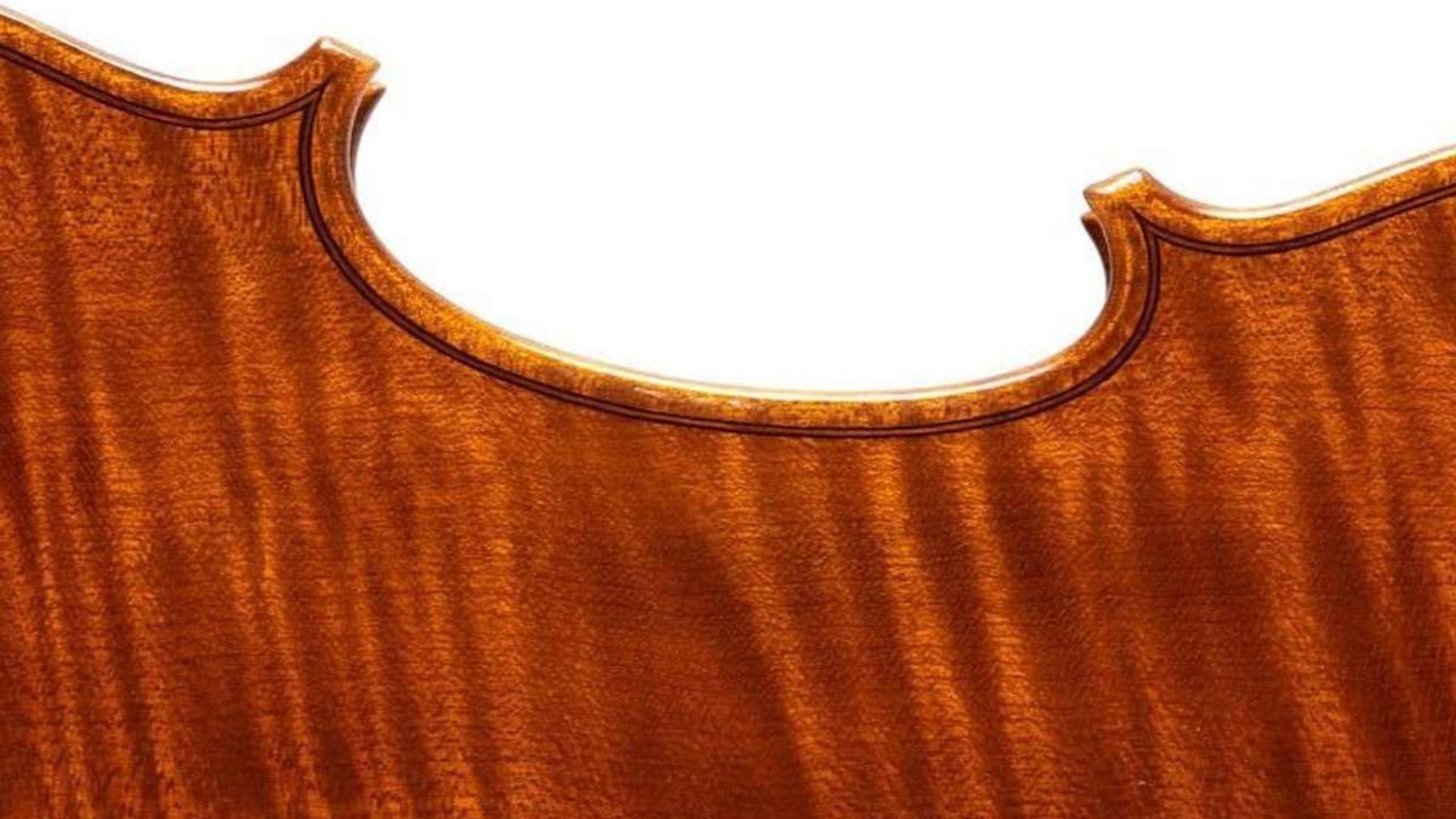
Detail of narrow-grain Paneveggio spruce violin top, iottivibe collection

Paneveggio spruce selection fine violins

cremona violin online

The Architecture of Sound: Why Paneveggio Spruce Defines Our Master Violins

Detail of narrow-grain Paneveggio spruce violin top, iottivibe collection
In the world of high-tier lutherie, a masterpiece is not merely built; it is grown. For professional musicians seeking unparalleled projection, harmonic complexity, and immediate response, the journey begins in the “Forest of Violins.” At Iotti & Vibe every instrument in our catalog is born from a rigorous, scientific selection of the world’s most prestigious resonance wood: Paneveggio Spruce.

Beyond Provenance: 10 Years of Natural Seasoning

The Paneveggio Forest in the Fiemme Valley has been the gold standard for master luthiers since the 17th century. However, the forest of origin is only the first step.

Every violin we offer is crafted from spruce that has been naturally air-seasoned for at least 10 years. This decade-long stabilization is critical for structural integrity and tonal maturity. To preserve the wood’s organic acoustic channels, we utilize only split logs rather than sawn. By following the natural grain of the fiber, we ensure maximum energy transmission and a vibration pattern that remains consistent over centuries of play.

The Precision of Physics: Radiation Ratio and Grain Selection

Our workshop bridges the gap between ancient tradition and modern acoustic science. We do not rely on visual aesthetics alone. While we prioritize narrow, perfectly regular grain patterns, we validate every plate through empirical data.

We systematically measure density and sound velocity to calculate the Radiation Ratio (Acoustic Radiation Index). This allows us to curate an inventory of instruments that are:

  • Lightweight: Providing instantaneous articulation under the bow.
  • Highly Resonant: Maximizing the amplitude of the sound box.
  • Elastic: Capable of withstanding high string tension while releasing a rich spectrum of overtones.

The Aesthetics of Maple: From the Balkans to the Parma Apennines

While the spruce top acts as the “engine” of the violin, the back, ribs, and neck provide the tonal reflection and visual soul. We select our maple based on the depth and character of its “flame” (marezzatura), sourcing from two primary regions:

  • Balkan Maple: Historically prized for its consistent density and deep, dramatic figuring.
  • Parma “Oppio” Maple: Sourced from the Apennines in the Province of Parma, this local treasure offers a unique aesthetic signature. Its distinctive flaming connects our instruments to the rich artisanal heritage of our own territory.

Engineered for the Discriminating Performer

Every violin in our collection is the culmination of this obsessive material selection. From the Radiation Ratio of the Paneveggio top to the final coat of varnish, our mission is to provide musicians with tools that are not just visual works of art, but true extensions of their artistic voice.

Experience the resonance of seasoned Paneveggio spruce.

Iotti&Vibe purfling shape

On choosing a contemporary instrument

cremona violin online

On choosing a contemporary instrument

Someone recently asked me what the difference could be between buying an old or a new instrument.
This got me thinking and I am not sure there is one clearcut answer to this question, but I thought I would write down a few reflections over this subject and hope someone find it interesting.
There is no doubt that the old violins of the famous makers of the 17.th an 18.th century holds a fascination to modern day players and violin makers alike. They represents unique pieces of art that amazingly are still in use.
For recent scientific insights on how contemporary violins actually project better than even Stradivaris, you can read this fascinating article on Strings Magazine.

We can hear the voice history ring out across the centuries whenever the bow is brought to the strings. Musicians are artists and also storytellers and playing an old instrument I believe helps in this regard as it becomes a vessel of history.

Some instruments in fact have been on incredible journeys in order to reach the hands of their modern owners. A great example would be the instruments of the Violins of Hope as each and every one of these violins have been the property of survivors of the holocaust before and during the war. I have not had the pleasure to hear them played however I can only imagine the emotion a musician must feel when playing one of these treasures. These emotions transcends any objective judgement of the instrument.

So what are the arguments in favor of contemporary instruments?

Nous Violin Inspired by G. Ornati Contemporary Style Iotti & Vibe award

Access to the maker

Having access to the actual maker of your instrument is highly valuable. If an accident happens and the violin needs repair the violin maker knows exactly what kind of glue is used and where. Pietro and I personally keep a detailed record of each instrument that we have built over the years and can easily go back and pull out every measurement and so on.
You can discover more about our making process, from wood selection to varnishing, on our detailed page Making an Instrument from Wood to Varnishing.

Thus knowing a person who knows every inch of the instrument can be extremely useful during your years of companionship.

Nous Violin Inspired by G. Ornati Contemporary Style Iotti & Vibe newlooking
Fewer unexpected expenses

It is useless to deny that you as a musician would rather not end up with an unexpected bill maybe only a year after buying a new instrument.

And unfortunately no matter how well you look after your violin certain issues can build up over time and if you have an old instrument it just is more likely you will have to face some of them.

For example a sound post crack is just the consequence of years of build up tension in a fragile area but the repair work needed is extensive. So if you decide on buying a contemporary instrument, the likelihood of these things happening just is way less.

Explore our selection of contemporary instruments available in our Online Shop, where quality and reliability go hand in hand.

Centuries of knowledge

Contemporary makers have access to a catalogue of knowledge unique to our modern age.
Even though we practice a craft that has changed very little over the past 400 years we are equally blessed by how easy access we have to a huge amount of research on the works of the old masters that are being conducted every day by other makers, scientists and other experts within the field.
This of course gives us a huge advantage when perfecting our skills so that we can build the best instruments possible.
For instance, our Guadagnini-inspired cello and viola models combine historic inspiration with modern innovation.

Sharing is caring

Sharing of knowledge between makers is another advantage point that we have nowadays and it is something that lifts all of us to a higher level. That is true in many fields and especially violin making.

If we look at the making of a violin as a scientific experiment in search of the ideal sound, progress is extremely slow on your own. Usually you count about 200 hours for the making of an instrument and if you want to test out a hypothesis you only want to change one small detail from time to time. It does not take a lot of calculating to discern that putting many minds together means that we all will advance much quicker.

If you want to learn more about our philosophy and team, visit our About page.


Iotti&Vibe wood italian luthier

Making an instrument – From raw materials to finished work of art

cremona violin online

Making an instrument – From raw materials to finished work of art

Iotti&Vibe wood italian luthier

WOOD

It all begins with the perfect selection of materials. Our spruce comes from the forest of Paneveggio where we go to pick out the best pieces. 

The spruce we use is cleaved – not cut – along the lines of the fiber, and the sound vibrations are carefully measured to secure the ultimate quality and density of the pieces. 

Our maple wood primarily comes from the Balcan areas. However, like the famous craftsmen of the past sometimes we also sometimes use the local maple Oppio from the Appenine mountain areas of Parma. Each piece is being matured from 6 to 20 years. 

Having selected the model, we choose the respective pieces based on structural and aesthetic qualities.

Iotti&Vibe violin makers

Method of construction

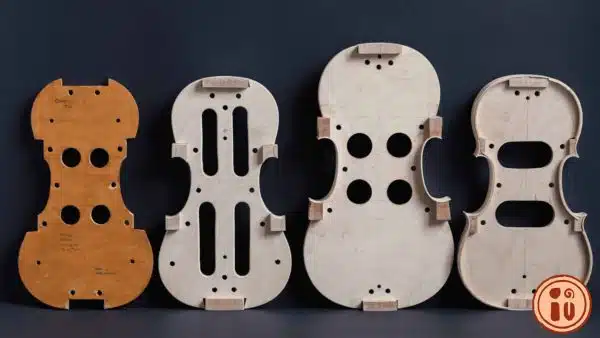
Using an internal mold, we prepare each piece separately before assembly. Therefore slight variations may occur from one instrument to another. Top and back are finished before they are to be connected with the ribs.

To ensure the correct resistance and elasticity we only use hide glue which ensures the correct resistance and elasticity.

Iotti&Vibe violin makers

Ribs 

To begin with we fit and cut the corner blocks using red willow, then with the aid of a hot iron and water each rib is bent and glued on to the mold. After that we bend and glue in the counter ribs, still using willow. With help of the mold the ribs are finished and transferred to top and the back. This traditional method echoes the influence of classical Italian luthiers, such as those from the  Guadagnini tradition, which inspires some of our stylistic decisions.

Iotti&Vibe violin makers violin top arching

Top and back 

Top and back are shaped to the ribs with special attention to the aesthetics of the outer lines and corners. We then shape the arching, always keeping the acoustic properties in mind.

Then with a small knife we cut the channel in which the purflings are to be inlayed. We normally use purflings of tinted pear wood and poplar. 

Now the inside is cut down to the correct thickness, we go by the method of carefully measuring the frequencies the top and back emit in accordance with the center point 

After this the symmetric f-holes are cut into the top, and the final step is fixating the base bar with glue. 

Iotti&Vibe violin makers

Scroll

Here comes Pietro’s favorite moment; the cutting of the scroll! This process of sculpting gives a moment of freedom to let loose one’s creativity and skill in using the gauges. 

Still it’s very important to pay attention to the shaping of fingerboard and neck as to ensure the right comfort and ease of playing.

Iotti&Vibe violin makers violin varnish

Varnish  

Now the instrument is ready to be varnished. We use an oil-based varnish and add color in form of natural pigments to obtain the wanted texture, color, transparency and movement of the varnish and wood. Varnishing takes time and each layer must dry sufficiently before moving forward to ensure sure that the varnish will sustain all changes of climate during travels and transportation. 
The quality of varnish plays a major role in the value of an instrument, discover more in our article on what makes violins so valuable.

Iotti&Vibe violin makers bridge

Set Up

These are the last steps to perfect the shape of the fingerboard, shaping the pegs, cutting the bridge and sound post to adjust the sound and balance of the entire range of strings. Selecting a good set up of pegs, chin rest and string holder is very important to us. Every detail matters. We then play the instruments before deciding the exact position of the sound post, bridge details etc. in order for the instrument to reach its maximum potential.
If you’re looking for an instrument built with this level of care, feel free to browse our main shop where you can find available violins, violas, and cellos.

Exploring the Art of the Modern and Contemporary Violin

Exploring the Art of the Modern and Contemporary Violin

cremona violin online

Exploring the Art of the Modern and Contemporary Violin

Exploring the Art of the Modern and Contemporary Violin

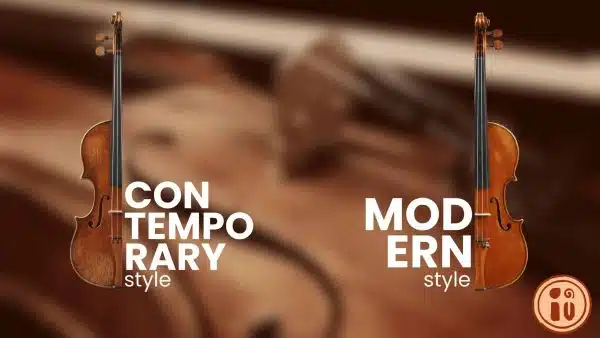
When you walk into a fine violin shop or browse a violin collection, you’ll often encounter instruments labeled modern and contemporary. Though sometimes used interchangeably, these terms point to distinct eras and philosophies in violin making — aspects every discerning violin maker or buyer will find fascinating when deciding to buy violin.

What does “modern violin” mean?
A modern violin refers to instruments crafted roughly between the late 19th century and mid20th century. These violins follow classical blueprints inspired by legendary Italian violin makers from Cremona — the cradle of violin tradition. You’ll find that their timber, varnish, and build firmly uphold centuriesold methods, only minimally refined with emerging technologies.
Luthiers such as Giuseppe Ornati represent the essence of this period, combining elegance, historical continuity, and precision. Read more about Giuseppe Ornati’s work.

Defining a “contemporary violin”
By contrast, contemporary violins, made by living makers invite innovation. Instrument makers experiment with design, materials, and acoustic properties. This approach aims to meet evolving demands, whether it’s louder projection, unique tonal colors, or personalized characteristics, while maintaining respect for tradition.

When visiting a violin maker or shop, you’ll discover that both modern and contemporary instruments bring something special:

  • Modern instruments offer a timeless, balanced sound language built to classical standards.
  • Contemporary violins might pair traditional craftsmanship with experimental tweaks, ideal for musicians wanting a signature timbre or projection suited to modern performance contexts.

Curious about what influences violin value beyond age? This article explores the key factors that determine quality and price.

Advantages of choosing a contemporary violin

  1. Craftsman connection You can interact with the violin maker directly, specify your preferences and receive personalized adjustments. Plus, future maintenance becomes seamless.
  2. Sound development These violins are built to improve with time, blending initial tonal clarity with evolving warmth, sometimes catching up with or surpassing much older Italian violins. ****
  3. Future value and resale Clear provenance and maker history means greater longevity in the marketplace.

Want to understand how these instruments are built? Follow the full process, from wood to varnishing, in our behind-the-scenes article

A few considerations before you buy

  • Break in period Unlike centuries old violins, which are typically performance ready, newer instruments may require some time of playing to fully blossom.
  • Tonal settling Initial setup visits over the first couple of months are common as the sound “opens up.” This is normal, not a fault in the instrument.

According to recent research, some contemporary violins may even project better than Strads, showing just how far modern luthiery has come.

viola-CASSA-13

Understanding the Viola

cremona violin online

Understanding the Viola

Va-Mar-2025-01-05_33_11zon

The viola stands out among string instruments for its rich, dusky sound. Deeper and more robust than the violin, it delivers powerful solo lines within the heart of the orchestra’s range. Its tone contrasts beautifully with the violin’s brightness and blends seamlessly with woodwinds like the clarinet and bassoon, making it essential for ensemble cohesion.

More Than Just a Middle Voice
Historically, the viola often filled the space between violin and cello parts, providing supportive harmonies rather than drawing attention. But that role has evolved. Since the 19th century, composers have challenged violists with parts just as intricate and expressive as those written for any other string instrument. Agile and capable, the viola has claimed its place as a full solo and ensemble voice.
Today, violists can choose from a wide range of instruments, from those rooted in classical tradition to bold new interpretations like our Guadagnini-inspired viola.

Tuning, Range & Role
As the alto member of the string family, the viola is slightly larger than the violin and sounds a fifth lower. Its four strings—C, G, D, and A—are spaced by perfect fifths. The lower strings produce a velvety, darker tone, and composers often indicate phrases be played on specific strings (e.g., “Sul C” or “Sul G”) to capture this unique character.

In a standard symphony orchestra, there are usually twelve violists arranged in pairs, each sharing a music stand. This section plays a vital role in balancing the ensemble’s harmony.
You can learn more about the viola’s role in the orchestra and its distinctive character in this guide.

The Craft Behind the Sound
Although the viola resembles a large violin in appearance, no standard size exists. Makers and performers often have personal preferences when it comes to dimensions, but the richness of tone comes down to much more than size.

The type of wood used, typically spruce or maple, is chosen with care for its grain and density. However, one often overlooked element significantly influences sound: varnish. Far from being decorative, varnish fuses with the instrument’s wooden surface and contributes directly to how sound resonates. A well-applied varnish enhances tonal clarity and projection.
Explore how these principles come to life in our Gasparo da Salò-inspired viola, which merges traditional forms with fine acoustic detail.

A Brief History
The viola, like its smaller sibling the violin, dates back to the 16th century. Among the first known craftsmen to develop the instrument was Andrea Amati, whose innovations helped shape the modern string family.

No longer confined to background harmonies, the viola has become a prominent voice within orchestras and chamber groups alike. With its distinctive timbre and expressive range, it offers both warmth and complexity qualities that make it an indispensable part of the string family.

Price Ranges for Violas
Understanding price brackets helps musicians plan their investment:

  • Student Violas: Generally priced from a few hundred euros up to around €1,500. These instruments are suitable for beginners, offering decent sound and playability without a large financial commitment.
  • Intermediate Violas: Usually range between €1,500 and €10,000. These violas often feature better craftsmanship and higher-quality materials, producing a more refined sound.
  • Professional Violas: Start around €5,000 and can reach €30,000 or more. These instruments are typically handcrafted by experienced violin makers and provide superior tonal richness, projection, and nuanced response.

Browse our curated viola shop collection to discover instruments for every level of experience and aspiration.
Much like a fine violin, a professional-level viola is an investment, valued for both musical quality and craftsmanship.

Balancing Budget and Musical Needs
Finding the right viola is about balancing your budget with the level of performance you expect from the instrument. Investing in a higher-quality viola crafted by a skilled violin maker can bring long-term satisfaction, both musically and financially.

When consulting a luthier, keep in mind that a carefully chosen instrument can support your growth and enhance your musical expression for years to come.

16. Exploring the violin family_ Characteristics and roles of its iconic members

Exploring the Violin Family

cremona violin online

Exploring the Violin Family

Understanding the viola

For anyone fascinated by string instruments, understanding the violin family offers a glimpse into centuries of musical evolution and craftsmanship. Whether you’re visiting a violin shop, speaking with a luthier, or considering a fine violin for sale, knowing the differences among the instruments in this family can help guide your choices and deepen your appreciation of their unique roles.

From the smallest violin to the deep-voiced double bass, the violin family has shaped both solo and ensemble music for generations.
ou can explore a deeper overview of the violin family’s origins and structure in this comprehensive resource.
Let’s take a closer look at each member of this distinguished group and the artistry behind their creation.

The Violin
The violin is the smallest and highest-pitched member of its family. It has four strings tuned in perfect fifths (G-D-A-E) and is celebrated for its brilliant tone and agility.

A fine violin is valued for its rich, singing voice and the subtle tonal colours it offers. Players seeking to buy a violin often explore instruments crafted by skilled violin makers, as the quality of construction significantly influences sound and playability.

For those wondering why some violins command such high value, we explain it in depth here.

Used across classical, folk, jazz, and contemporary music, the violin remains central to many musical traditions. It’s the instrument most often encountered when browsing a violin store or exploring violins for sale.

The Viola
Slightly larger than the violin, the viola offers a deeper, warmer tone. Tuned a fifth lower (C-G-D-A), it often fills the inner voices in orchestral and chamber music, providing harmonic richness and depth.

The viola’s unique timbre appeals to many musicians, and like the violin, its quality can vary widely depending on the craftsmanship of the luthier and the materials used. Those exploring violas at will find that comfort and size are crucial factors, as the instrument’s dimensions can differ significantly.

If you’re drawn to the warm resonance of the viola, we recommend discovering our Guadagnini-inspired viola a contemporary interpretation of classical Italian design.

The Cello
The cello, larger still, is tuned an octave below the viola (C-G-D-A) and rests on the floor supported by an endpin. Its voice ranges from powerful bass notes to lyrical melodies, making it both a solo and ensemble favorite.

A fine cello crafted by an expert violin maker offers remarkable projection and depth of sound. Those looking to buy a cello often test several instruments in a violin shop to find the one that suits their physical comfort and tonal preferences.

Among our instruments, the Guadagnini-inspired cello embodies this expressive power with modern precision and historical influence.

The Double Bass
The double bass is the largest and lowest-pitched member of the violin family. While it shares some design similarities, it differs in shape and tuning, typically tuned in fourths rather than fifths. Its deep, resonant tone anchors the sound of orchestras, jazz ensembles, and many other musical settings.

When browsing a violin store or consulting a luthier about basses, players consider factors like string length, shape, and ease of playing, as the double bass requires different physical technique compared to its smaller relatives.

The Craftsmanship Behind the Violin Family
Whether it’s an Italian violin, a viola, cello, or double bass, the making of these instruments involves extraordinary skill. A luthier carefully selects tonewoods like spruce for the top and maple for the back and sides. Each curve, thickness, and varnish layer affects how the instrument vibrates and sounds.
We’ve documented this journey in detail, from tonewood selection to varnishing through the making-of process, offering a behind-the-scenes look into fine instrument construction.

Visiting a violin shop or working with a trusted violin maker allows players to explore instruments crafted with varying techniques and materials. Even subtle differences can shape the character and response of a fine violin or any member of the violin family.

Choosing the Right Instrument
If you’re considering a violin for sale—or any instrument in the violin family—it’s wise to try different sizes, makers, and models. The right choice depends on physical comfort, musical goals, and the desired sound.

Whether you’re searching for the brilliance of a fine violin, the warmth of a viola, the rich resonance of a cello, or the deep power of a double bass, exploring the violin family opens a world of possibilities.


To help with that decision, we’ve outlined key factors to consider when choosing a contemporary instrument, especially for today’s professional and aspiring musicians.

Understanding these instruments and the artistry behind them enriches any musician’s journey. From the workshop of a skilled violin maker to the shelves of a violin store, each member of the violin family holds its own story and sound, waiting to inspire the next performance.

How to Travel Safely with Your Violin

How to Travel Safely with Your Violin

cremona violin online

How to Travel Safely with Your Violin

How to Travel Safely with Your Violin

For many musicians, travel is an inevitable part of life, whether it’s for performances, lessons, competitions, or simply exploring new places. Bringing a violin along requires careful preparation to protect the instrument’s condition and ensure smooth journeys.

Always Keep Your Violin with You

Whenever possible, avoid checking your violin into the aircraft hold. Cabin conditions are safer and less variable than the luggage compartment. A fine violin is particularly sensitive to temperature and humidity changes, and rough handling can cause significant damage.

Airlines often allow violins as carry-on items, but it’s wise to confirm their size and weight restrictions in advance. A well-made violin case, recommended by any skilled luthier, should be sturdy enough to protect the instrument while staying within cabin baggage limits.
For further advice on how to take care of your instrument during your travels, you can read our tips for maintaining your violin.

Mind the Climate and Humidity

Violins, especially older instruments or fine violins, are sensitive to environmental changes.

When traveling to a different climate, allow your violin to adjust gradually. Many players use a humidifier or moisture control system inside the case to help maintain stable conditions.
You can find additional information about climate concerns and violin care in our FAQs section, where we address common questions from musicians.

Pack Your Accessories Thoughtfully

Beyond the violin itself, remember to pack essential items securely:

  • Bow: Ensure it’s firmly fastened in its holder inside the case.
  • Rosin: Store in a way that prevents it from cracking in temperature extremes.
  • Strings: Carry spare strings, especially if you’re traveling for a performance or audition.
  • Shoulder rest: Place it in a compartment where it won’t press against the instrument.

A violin shop or violin store can advise on travel-friendly accessories and protective solutions that suit your specific needs.

Insurance for Peace of Mind

Accidents can happen, no matter how careful you are. Insuring your violin, particularly if it’s a fine violin, can protect you financially if your instrument is damaged, lost, or stolen.

Consulting a luthier can help you estimate the current value of your violin for insurance purposes. Keep documentation and photos of your instrument in case you need to make a claim.
To better understand the value and craftsmanship of fine violins, including historical influences, you can read about Renato Scrollavezza, whose work has inspired generations of luthiers.

Plan Ahead for Security Checks

Airport security can sometimes pose challenges for musicians. Be prepared for your violin case to be opened and inspected. Keep the inside of your case tidy so security officers can examine it easily without needing to handle your instrument unnecessarily.

If questioned, explain politely that the violin is a delicate and valuable item. This often helps ensure more careful handling during checks.

Make sure your instrument or bow does not include any protected materials and if so always bring your certificate of origin

Materials as ivory on old fine bows is subject to protection and are not allowed to be imported without proper certification of origin.
For additional tips on how to fly with your violin and handle inspections, we recommend this external guide on traveling with a violin.

Choosing the Right Case

Investing in a strong, well-padded case is one of the best protections you can give your instrument during travel. A high-quality case helps shield your violin from impact, pressure, and climate changes.

When you visit a violin store, ask for advice on modern cases designed for frequent travelers. Many options combine lightweight materials with excellent structural protection.

Why Choosing a Contemporary Violin

Why Choosing a Contemporary Violin

cremona violin online

Why Choosing a Contemporary Violin

Why Choosing a Contemporary Violin

For many musicians, the idea of owning a historic or antique violin carries great appeal. Yet in today’s world, modern instruments are earning well-deserved respect. Whether you’re a student ready to invest more seriously in your craft, or a professional seeking a new voice, exploring contemporary violins might be a wise decision. Working personally with a luthier, or visiting a violin shop, can help you understand the unique value a modern instrument can offer.

The Appeal of Contemporary Craftsmanship

A fine violin made today benefits from advanced knowledge of materials, construction techniques, and acoustic design. Modern luthiers can study great instruments from the past and apply those insights while introducing their own innovations.
For a deeper dive into what makes violins valuable today, read our article on what makes violins so valuable.

For players, this often means a contemporary instrument may offer a powerful, clear sound and excellent responsiveness. Many musicians find that contemporary violins speak quickly under the bow and project well in both small and large venues.In fact, recent research suggests that some contemporary violins may even project better than legendary instruments like the Stradivarius.

Excellent Condition and Reliability

One major advantage of choosing a modern violin is that it is in excellent structural condition from the outset. Unlike older instruments, contemporary violins have not endured decades, or centuries, of wear, repairs, or environmental changes.

Owning a fine contemporary instrument can mean fewer concerns about cracks, past restorations, or hidden structural issues. If you plan to buy a violin as a daily tool for demanding practice and performance schedules, this reliability is a significant benefit.

More Accessible Pricing

While fine antique instruments often command high prices due to their age, provenance, and collectability, an instrument from a living maker offer outstanding quality at a more accessible cost. This can be an important consideration, especially for younger musicians or professionals starting their careers.

You can explore our current selection of violins for sale made by expert luthiers, including a recent creation inspired by Giuseppe Ornati.

For those visiting a violin store or browsing violins for sale, modern instruments often present an opportunity to own a high-quality violin made by a skilled violin maker, without the premium attached to historic names.

Supporting the bond between luthiers and musicians

Choosing a contemporary violin is also a way to support today’s community of luthiers and their ongoing bond with the music world, ensuring that this collaboration continues to thrive for future generations. Learn more about our philosophy and process on our About page.
We highly believe that both spheres can benefit from this connection.

A Personal Voice for Modern Players

Modern violins can be an excellent match for musicians who want to develop a unique artistic voice. Because these instruments have not yet developed a long history of ownership or specific tonal associations, players often feel freer to shape their own sound.

If you’re considering buying a fine violin to suit your evolving style, trying contemporary instruments alongside older ones can be enlightening. Consultation with a trusted luthier can help you compare qualities like tone color, response, and projection.

Conclusion

Deciding to buy a violin is a significant step in any musician’s journey. While antique violins carry undeniable charm and heritage, fine contemporary violins offer outstanding craftsmanship, reliability, and often a more approachable price. Exploring our modern instruments, with the guidance of a skilled luthier or violin maker, could open the door to discovering an instrument that perfectly suits your playing and your aspirations. 


Understanding Violin Strings

Understanding Violin Strings

cremona violin online

Understanding Violin Strings

Understanding Violin Strings

A Guide for Choosing and Maintaining Your Sound

The strings on a violin are crucial to its overall voice. They influence everything from projection and volume to warmth and clarity. Even a high-quality instrument crafted by a skilled violin maker will not reach its full potential without suitable strings.

Strings differ in materials, construction, and tension. Historically, gut strings were common and are still valued for their complex, rich sound. However, modern synthetic-core and steel-core strings offer stability and durability, which many musicians appreciate. Choosing the right type of string can help you tailor your fine violin’s sound to your personal taste.
For a complete breakdown of the different types of violin strings and their characteristics, we recommend reading this detailed guide from Strings Magazine.

1- Knowing When to Change Your Strings

A violin’s strings do not last forever. Over time, they lose their elasticity and tonal quality, leading to a duller, less responsive sound. For musicians who play daily, changing strings every few months is often necessary to keep the instrument sounding its best.

Signs that it might be time to replace your strings include:

  • Difficulty maintaining tuning stability
  • A noticeable drop in volume or clarity
  • Fraying or discoloration near the bridge or nut

Consulting a luthier or an experienced professional in a violin store can help determine the right time for a string change and ensure your new strings are fitted correctly.
You can also find practical tips in our article on how to maintain your violin, including advice on string care and replacement routines.

2- Choosing the Right Strings for Your Instrument

When you’re considering a violin for sale or looking to buy a violin to suit your playing style, it’s helpful to explore how different strings affect the sound.

Gut strings are known for their warm, nuanced tone but are sensitive to humidity and temperature changes. Synthetic-core strings aim to replicate gut’s warmth while providing better stability and quicker break-in times. Steel-core strings often offer a bright, focused sound and are durable, making them popular among some performers and students alike.

Trying different brands and tensions is often the best way to discover what complements your particular instrument. Each violin, can react differently to string types.
If you’re searching for a new instrument that responds well to different string setups, explore our curated collection in the Iotti Vibe violin shop.

3- Seeking Guidance from a Professional

Visiting an instrument shop or consulting a skilled violin maker or luthier can make a significant difference when choosing strings. Professionals can assess your violin’s characteristics and help you select strings that enhance your instrument’s strengths.

If you’re considering buying a new violin, it’s wise to factor in the type of strings you might use. The right combination can bring out the best in your instrument and support your musical goals.
For violists, the same principles apply, explore options like our viola inspired by Guadagnini, which responds beautifully to a wide range of string types.

4- Maintaining the Sound of Your Violin

Routine string care is important for keeping your violin in good condition. Regularly clean rosin dust from your strings with a soft cloth, and check for signs of wear or damage. Keeping your strings in top shape contributes not only to the sound but also to the overall health of your instrument.
Whether you’re looking for a violin for sale, exploring a violin online store

A fine violin deserves careful attention to every detail, and strings are no exception. Whether you’re looking for a violin for sale, exploring a violin store for accessories, or working with a trusted luthier, understanding how to choose and maintain your strings is key to achieving your ideal sound.